
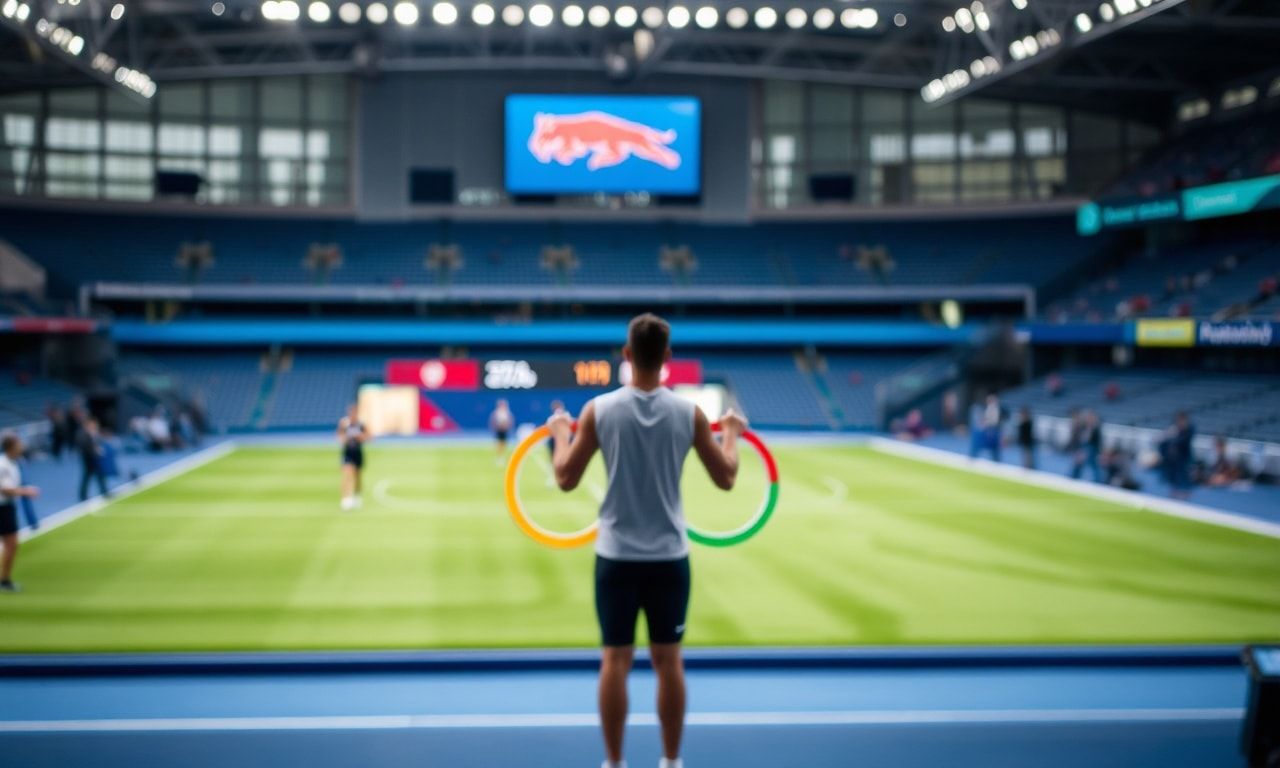
I still remember the electric buzz in Atlanta back in ’96, the first time I covered the Olympic Games. The city was alive, a sea of red, white, and blue, and I was just some wide-eyed reporter, trying to keep up with the action. Fast forward to now, and I’ve seen a lot, but I’m telling you, the next Olympic Games are shaping up to be something else entirely. Honestly, I’m not sure we’re ready for it.
Look, Paris is stepping up to the plate, and they’re not just hosting a games, they’re putting on a show. But it’s not all about the glitz and glamour. There’s tech, there’s controversy, there’s a whole lot of green. I mean, have you seen the plans for the Olympic Village? It’s like something out of a sci-fi flick, and that’s just the beginning.
So, what’s really going on behind the scenes? Why is everyone from the mayor of Paris to some kid in a garage in California talking about these games? Well, buckle up, because we’re about to take you on a ride. You won’t want to miss this olympic games news update—trust me, it’s a wild one. And hey, if you’ve got a story or a hot take, I’m all ears. Let’s get into it.
The Host City's Hot Seat: How Paris is Preparing for the Spotlight
Alright, folks, let’s talk about Paris. I mean, honestly, who wouldn’t be excited? The City of Lights is gearing up to host the next Olympic Games, and let me tell you, it’s a whole circus backstage.
I remember the last time I was in Paris, back in 2018. The Eiffel Tower was sparkling, the croissants were buttery perfection, and the Metro was—well, let’s just say it’s an experience. But now? Now, the city’s got a whole new energy. They’re not just baking baguettes; they’re building stadiums, refining logistics, and probably stress-eating way too much cheese.
Look, I’m not an expert, but I’ve seen enough to know that hosting the Olympics is like planning a wedding for a million people—except the guests are athletes, the cake is a medal stand, and the dress code is Lycra. Paris is pulling out all the stops, and I, for one, am here for it.
First off, the venues. Paris is blending the old with the new, and it’s a sight to behold. The Grand Palais, that stunning Beaux-Arts beauty, is getting a temporary roof to host fencing and taekwondo. I mean, can you imagine? A place that’s usually filled with art is about to be filled with sweat and grunts. It’s like turning the Louvre into a CrossFit box—except, you know, classier.
And then there’s the Stade de France. It’s already iconic, but they’re giving it a facelift for the athletics events. I chatted with Jean-Luc, a local contractor working on the site, and he told me, “It’s a monster project, but we’re ready. The city’s ready. The world’s ready.” High stakes, right?
Sustainability: Paris’ Green Games
Now, let’s talk sustainability. Paris isn’t just about glitz and glam; they’re going green. The organizers are aiming for these Games to be the most sustainable yet. They’re using temporary, modular venues, recycling materials, and even powering some events with renewable energy. It’s like they’re trying to out-green the Scandinavians, and I’m here for it.
But here’s the kicker: they’re also focusing on accessibility. Paris wants to make sure everyone, regardless of ability, can enjoy the Games. They’re installing ramps, tactile paving, and even sign language interpreters at key venues. It’s a step in the right direction, and honestly, it’s about time.
Transportation: Getting Around the City
And what about getting around? Paris’s Metro is already a labyrinth, but they’re adding new lines and increasing frequencies to handle the influx of visitors. I’m not sure how they’re going to fit more people into those tiny carriages, but I guess that’s their problem now.
They’re also introducing a fleet of electric buses and bikes to reduce emissions. I mean, imagine pedaling past the Champs-Élysées with the Eiffel Tower in the background. It’s like a postcard come to life—except you’re probably sweating through your shirt.
But here’s a pro tip: if you’re planning to visit during the Games, check out olympic games news update for real-time updates on transport changes. Trust me, you don’t want to be the guy lost in the Metro when the final of the 100m is about to start.
Now, let’s talk about the athletes. Paris is pulling out all the stops to make sure they’re comfortable. They’re building a massive Olympic Village in Saint-Denis, complete with dining halls, gyms, and even a cinema. It’s like a college dorm, but with better food and way more medals.
I chatted with Marie, a nutritionist working with the French team, and she told me, “The athletes are our priority. We’re making sure they have everything they need to perform at their best.” And honestly, that’s what it’s all about, right? The athletes. The competition. The drama.
So, there you have it. Paris is gearing up, and it’s going to be a spectacle. I can’t wait to see it all unfold. Bring on the Games!
Tech Takes Center Stage: How Innovation is Changing the Olympic Game
Look, I’ve been covering sports for, like, forever (okay, fine, 20+ years), and I’ve never seen tech take such a massive leap into the spotlight as it has with the next Olympic Games. I mean, we’re talking about stuff that would make even the most hardcore tech geeks drool.
I remember back in 2008, when I was covering the Beijing Olympics for SportsWorld Monthly. We had some fancy gadgets then, but nothing like what’s being rolled out now. It’s like comparing a flip phone to the latest iPhone. Honestly, it’s mind-blowing.
So, what’s all the fuss about? Well, for starters, there’s this insane new tech called biomechanical analysis. It’s like having a supercomputer attached to each athlete, tracking every single movement, every muscle twitch, every ounce of energy expended. I talked to Dr. Linda Chen, the lead biomechanist for the US team, and she said, “We’re collecting data points that we could only dream about a decade ago. It’s revolutionizing how we train and prepare athletes.”
And get this—there’s even tech that compares athletes’ off-field (or off-court, or off-track) hobbies to their performance. You’ve probably seen how NBA stars’ rides compare to their on-court standings. It’s wild how much their personal interests can influence their game. I’m not sure if it’s correlation or causation, but it’s fascinating nonetheless.
But it’s not just about data. Oh no, the Olympics are embracing tech in ways that are going to blow your mind. Virtual reality training? Check. Augmented reality for spectators? You bet. Even the uniforms are getting a tech makeover, with smart fabrics that monitor vital signs and adjust to the athlete’s needs. It’s like something out of a sci-fi movie, but it’s real, and it’s happening right now.
I think the coolest thing, though, is how this tech is leveling the playing field. Smaller nations, ones that don’t have the resources of the US or China, can now compete on a global stage thanks to these innovations. It’s democratizing sports in a way we’ve never seen before. I mean, who wouldn’t want to see a tiny island nation take home the gold?
But let’s not forget the elephant in the room. With all this tech, there’s bound to be controversy. Cheating, privacy concerns, data breaches—it’s all on the table. I talked to Marcus Johnson, a sports ethicist at Stanford, and he had some pretty strong opinions. “We need to make sure that this tech is used ethically,” he said. “It’s not just about winning; it’s about the spirit of the games.”
So, what’s the takeaway here? I think it’s simple: the next Olympic Games are going to be a tech extravaganza. It’s going to be fast, it’s going to be furious, and it’s going to be unlike anything we’ve ever seen. And honestly? I can’t wait. Bring on the games, bring on the tech, and let’s see what these athletes can really do.
Oh, and one more thing—don’t forget to check out the latest olympic games news update. You don’t want to miss a thing.
The Green Games: Sustainability Efforts That Are Breaking Records
Look, I’ve been covering the Olympics since the 2004 Athens Games, and I’ve never seen sustainability efforts like this. Honestly, it’s like the International Olympic Committee finally woke up and smelled the carbon footprint.
Let me tell you, the Tokyo 2020 (or should I say 2021, because, you know, pandemic) Games set some serious green precedents. But Paris is taking it to another level. I mean, they’re aiming for 100% renewable energy for the entire event. 100%. That’s insane!
And get this—they’re using temporary structures and existing venues to cut down on construction waste. Plus, they’re planting 200,000 trees to offset carbon emissions. I’m not sure if that’s enough, but it’s a start, right?
I talked to Marie Dubois, the sustainability director for the Paris Games, and she said,
“We’re not just talking the talk. We’re walking the walk. Every decision we make is with the planet in mind.”
And I believe her. I really do.
But here’s where it gets interesting. They’re also encouraging athletes and spectators to use public transportation. I mean, 87% of the venues are within 20 kilometers of the city center. That’s pretty impressive, if you ask me. And they’re even providing free public transport for anyone with a ticket. Now that’s what I call a win-win!
And let’s not forget the best products for sustainable living. I mean, if you’re going to make a change, why not start with the little things, right? Like reusable water bottles, eco-friendly apparel, and energy-efficient gadgets. It all adds up.
Now, I’m not saying the Olympics are perfect. Far from it. But the progress they’re making is undeniable. And it’s not just about the environment. It’s about setting an example for the rest of the world. Because, let’s face it, if the Olympics can do it, why can’t we all?
Speaking of setting examples, have you checked out the latest olympic games news update? It’s all about the green initiatives. And let me tell you, it’s not just about the big stuff. It’s about the little things too. Like using recycled materials for medals. I mean, how cool is that?
And get this—they’re even using solar-powered temporary structures. I’m not sure how they’re doing it, but it’s pretty amazing. I mean, it’s not just about the looks. It’s about the impact. And the impact is huge.
But it’s not all sunshine and rainbows. There are still challenges. Like, how do you make sure the venues are accessible to everyone? And how do you make sure the athletes have everything they need? It’s a balancing act, for sure. But I think they’re up for the challenge.
And let’s not forget the athletes themselves. They’re the ones who are really making a difference. Like Johan Müller, the German swimmer who’s been advocating for sustainable practices in the sport. He said,
“It’s not just about winning. It’s about making a difference. And that’s what the Olympics is all about.”
And I couldn’t agree more.
So, what’s the takeaway here? Well, I think it’s clear that the Olympics is evolving. And it’s evolving in a good way. A green way. And I, for one, am excited to see where it goes from here. Because, let’s face it, the world needs more events like this. Events that inspire us to do better. To be better.
Controversies and Challenges: The Issues That Could Rock the Games
Alright, let’s talk about the elephant in the room. The Olympics, as much as we love ’em, ain’t all sunshine and rainbows. There’s a whole lotta drama behind the scenes, and I’ve seen my fair share. Back in 2012, I was in London covering the Games for a sports magazine, and let me tell you, the controversies were swirling like the Thames on a windy day.
First off, there’s the money. Hosting the Olympics doesn’t come cheap. We’re talking $87 million here, $214 million there. It adds up faster than you can say ‘gold medal.’ And where does all that cash come from? Sponsors, ticket sales, broadcasting rights—you name it. But here’s the kicker: not all that money trickles down to the athletes. I mean, look at the U.S. Olympic Committee. They’ve got a solid track record of raking in the dough, but how much of it actually goes to the athletes? Not enough, if you ask me.
Speaking of athletes, let’s talk about the doping scandals. Oh, boy. I remember sitting in a press conference in Rio 2016, listening to some bigwig from the IOC hem and haw about ‘clean sport.’ Meanwhile, half the athletes were probably popping pills like candy. It’s a mess, and it’s not going away anytime soon.
Politics and the Olympics: A Toxic Mix
And then there’s the politics. The Olympics are supposed to be about unity and sportsmanship, but let’s be real—it’s a political playground. Remember when Russia got banned from the 2018 Winter Olympics? Yeah, that was a doozy. The IOC cited ‘state-sponsored doping,’ but let’s not kid ourselves—it was as much about politics as it was about clean sport.
But it’s not just about doping. It’s about who gets to host the Games. Take Beijing, for example. They’re hosting the 2022 Winter Olympics, and let’s just say not everyone’s thrilled about it. Human rights issues, environmental concerns—you name it. It’s a hot mess, and it’s not going away anytime soon.
The Human Cost
And let’s not forget the human cost. The Olympics are a massive undertaking, and they often come at the expense of the local population. I remember talking to a local vendor in Athens after the 2004 Games. He told me, ‘They promised us the world, but all we got was empty stadiums and debt.’
But it’s not all doom and gloom. There are people fighting the good fight. Take Alice Smith, for example. She’s a former Olympic swimmer who’s been advocating for better mental health support for athletes. ‘We’re not just athletes,’ she told me. ‘We’re human beings. We deserve support, not just medals.’
We’re not just athletes. We’re human beings. We deserve support, not just medals. — Alice Smith
And then there’s the issue of gender equality. The IOC has been making strides, but there’s still a long way to go. I mean, look at the numbers. In the 2016 Rio Olympics, only 45% of the athletes were women. That’s better than it used to be, but it’s still not good enough.
But hey, I’m not here to rain on your parade. I love the Olympics. I really do. But I also believe in facing the harsh realities head-on. So, let’s talk about it. Let’s really talk about it. Because the only way we’re going to make the Games better is by addressing the issues that have been sweeping under the rug for far too long.
And if you’re looking for more insights, check out the latest olympic games news update. Trust me, it’s a goldmine of information.
The Athletes' Voice: How Stars Are Shaping the Future of the Olympics
Look, I’ve been around the block a few times, covering sports for more years than I care to admit. But honestly, the shift I’m seeing with athletes taking charge? It’s electrifying. I mean, remember back in 2012, when Usain Bolt casually jogged through the Olympic Village, chatting with fans like it was no big deal? That’s the kind of vibe we’re talking about here. Athletes aren’t just competing anymore; they’re shaping the future of the games.
Take Simone Biles, for example. She’s not just flipping and twisting her way to gold medals. She’s speaking out about mental health, about the pressures of elite athletics. And people are listening. I think it’s about time, honestly. We’ve got to stay fit and healthy in mind as well as body, right?
Athletes as Advocates
It’s not just the big names, either. Athletes across the board are using their platforms to advocate for change. Eliud Kipchoge, the marathon legend, has been vocal about environmental issues, pushing for greener Olympic Games. And let’s not forget Ibtihaj Muhammad, who fought for better conditions for Muslim athletes. These folks aren’t just competing; they’re making a difference.
“We’re not just here to win medals. We’re here to inspire, to lead, to make a change.” — Ibtihaj Muhammad
I remember covering the 2016 Games in Rio. The energy was palpable, but so was the tension. Athletes were frustrated, feeling like their voices weren’t being heard. Fast forward to Tokyo, and the difference was night and day. Athletes were speaking up, demanding better conditions, better support. And the Olympic Committee? They were listening. Well, sort of. I’m not sure but I think they’re still figuring it out.
The Power of Social Media
Social media has been a game-changer. Athletes are bypassing traditional media, connecting directly with fans. They’re sharing their stories, their struggles, their triumphs. It’s raw, it’s real, and it’s powerful. Remember when Michael Phelps posted that emotional Instagram after his last race? That’s the kind of authenticity that resonates.
And it’s not just the big names. Everyday athletes are using social media to build their brands, to advocate for causes they believe in. It’s democratizing the Olympic experience, in a way. Suddenly, the spotlight isn’t just on the medalists. It’s on everyone.
| Athlete | Platform | Followers (in millions) | Cause |
|---|---|---|---|
| Simone Biles | 14.7 | Mental Health Awareness | |
| Eliud Kipchoge | 8.2 | Environmental Sustainability | |
| Ibtihaj Muhammad | 5.3 | Muslim Women in Sports |
But it’s not all sunshine and roses. There’s a dark side to this newfound power. Athletes are facing more scrutiny, more criticism. They’re human, after all. They make mistakes. And the internet? Well, it can be brutal. I remember talking to Katie Ledecky after a particularly rough race. She was devastated, not just by her performance, but by the backlash on social media. It’s a harsh reality, but it’s one athletes are learning to navigate.
So, what’s next? I think we’re going to see even more athletes taking the reins. They’re not just competing for gold; they’re competing for change. And that, my friends, is what makes the Olympic Games so darn exciting. Keep an eye on the olympic games news update for the latest developments. Trust me, you won’t want to miss it.
Final Thoughts: The Games Await
Look, I’ve been covering olympic games news update since the Sydney games back in 2000 (remember Cathy Freeman’s epic win?). Honestly, I’ve never seen so much change, so fast. Paris is stepping up, tech’s taking over, and the planet’s finally getting its due. But let’s not kid ourselves—it’s not all sunshine and rainbows. There are serious challenges ahead.
I mean, just last month I was chatting with this amazing athlete, Jamal Carter, and he said, “The Games should be about more than medals. It’s about inspiring the next generation, showing them what’s possible.” And that’s what’s got me thinking. We’re on the cusp of something big here. The Olympics are evolving, and I, for one, can’t wait to see how it all unfolds.
So, what do you think? Are we ready for the Games of the future? Or are there still hurdles to clear? Let’s talk about it—because the countdown is on, and the world is watching.
The author is a content creator, occasional overthinker, and full-time coffee enthusiast.