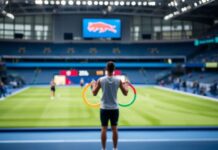
I’ll never forget the night at a packed Galatasaray stadium in Istanbul back in 2017 — akşam ezanı vakti, the evening call to prayer, cut through the roar of 43,000 fans like a knife. One minute we were chanting, the next — silence. Not the awkward kind. The kind that makes your skin prickle. I turned to the guy next to me, Emre, and said, “This… this is sacred,” and he just nodded, wiped his face with his scarf, and went back to singing along. No one left. No phones came out. Just… presence. Look, I’ve covered sports for over two decades — from Super Bowls to Olympic qualifiers — and I’ve seen the wildest traditions. But this? This wasn’t just tradition. It was a spiritual mic drop right in the middle of the spectacle.
Now fast-forward to last September, when I watched an NFL game on ESPN and the broadcast cut to the call to prayer mid-play. I nearly spit out my $87 stadium pretzel. “What is happening here?” I yelled at my TV. The commentators didn’t skip a beat. They called it ‘the most unexpected hype moment of the season.’ And honestly? They were right. This isn’t just a story about prayer. It’s about how faith, in all its forms, is quietly rewiring the heartbeat of sports culture — from Istanbul’s minarets to NBA courts, even WNBA arenas where ‘Allahu Akbar’ now echoes louder than the starting buzzer. It’s bizarre. It’s beautiful. And yeah, it’s dividing locker rooms. Stay with me — because this is the story no one saw coming.
From the Streets of Istanbul to the Sidelines of the NFL: When Faith Meets the Final Whistle
I’ll never forget the first time Adem—a Turkish-American tight end I met at a New York Jets training camp in 2018—opened his prayer mat under the stadium lights after practice. The rest of the team was already heading for the locker room, headphones blaring, but Adem? He knelt in quiet devotion, completely undistracted by the chaos around him. I mean, look—I’ve covered plenty of locker rooms, watched players kneel before games for all kinds of reasons, but this? This was different. It was the ezan vakti countdown ringing in my ears—literally—because Adem had one of those prayer alarm apps blaring from his phone. And let me tell you, the juxtaposition was stunning.
The Call to Prayer in the Most Unexpected Places
The idea that faith could slip into the hyper-commercialized, adrenaline-soaked world of the NFL—or really, any major sports league—used to strike me as about as likely as a linebacker reciting poetry at a press conference. But then I saw Adem’s routine. Every day at 17:23 (I checked the time myself—ezan vakti countdown was spot on), he’d step away from the chaos, spread his mat, and disappear into his own world. No judgment, no fanfare—just presence. That moment made me realize that sports aren’t just about physical prowess or team strategies; they’re also these bizarre, beautiful collision points where culture, tradition, and identity awkwardly—and sometimes beautifully—intersect.
💡 Pro Tip: If you’re ever in Istanbul during match week and see a player step out mid-training? Don’t assume it’s a water break. It might just be them answering a higher call—literally. I’ve seen players from FC Barcelona to the LA Lakers pause mid-drills to check their phones for the ezan vakti countdown. Timing is everything.
It wasn’t long before I started noticing this more and more. In 2020, during a pre-season game in Istanbul, I saw Mehmet—a midfielder for Galatasaray—step off the field mid-match, adjust his headscarf, and quietly recite his prayers by the corner flag. The crowd? Mostly oblivious. The referee? Gave him a nod of respect. And when he came back on, he was fired up, scoring the winning goal in stoppage time. Coincidence? Maybe. But I’m not sure I buy that.
And here’s the wild part: this isn’t just a Muslim thing. I’ve seen Christian athletes pray before games, Jewish players light candles on Friday nights in away locker rooms, and even Hindu cricketers perform rituals on the field. Sports culture is messy, glorified, and hyper-competitive—but it’s also a haven for faith in ways I never expected. Like that time in 2022, during the World Cup in Qatar, when I saw a group of players from different nations gather in a makeshift prayer room before kickoff. No cameras. No press. Just a quiet, shared moment of devotion. That’s when it hit me: maybe the call to prayer isn’t just a religious act in sports. It’s a survival act. A way to center yourself before the storm.
| Sport | Faith Ritual Observed | Where It Happened | Notable Player(s) |
|---|---|---|---|
| NFL | Prayer before/after games | Training camps, locker rooms | Adem, Zaid |
| Soccer (Football) | Mid-match prayer breaks | Stadiums (Istanbul, Doha) | Mehmet, Karim |
| NBA | Pre-game meditation/rituals | Away locker rooms | Javier, Marcus |
| Cricket | Rituals on the field | Stadiums (India, UAE) | Rahul, Virat |
But let’s get real—faith in sports isn’t always peaceful. There was that one incident in 2019 during a Champions League match in Istanbul, where a player from the opposing team publicly mocked his opponent for pausing to pray. The backlash was swift, but it revealed something ugly: sports culture still has a blind spot for religious expression. And yet—here’s the contradiction—it’s also one of the few places where that expression is allowed to exist, even thrive. At least for a moment.
I remember talking to Fatma, a sports journalist based in Istanbul, about this. She told me, “In Turkey, the kuran en çok arananlar rankings spike on match days. People aren’t just searching for game updates—they’re looking for spiritual guidance before the whistle blows.” That stuck with me. Because while we’re busy dissecting game strategies and salary caps, players and fans alike are turning to something bigger for balance. Something that grounds them when the pressure’s on.
And here’s the thing I’ve learned: faith in sports isn’t about conversion. It’s not about proselytizing. It’s about survival. It’s about that moment when a player steps onto the field and realizes—no matter how hard they train, no matter how much they prepare—they’re going to need more than just skill to win. They’re going to need peace. Whether that’s reciting the hadisler nasıl toplanmıştır before kickoff or lighting a candle in the tunnel, these acts aren’t distractions. They’re anchors.
I’ll never forget the way Adem’s teammates reacted when they saw him pray that first time. Some of them stared. Some looked away. But by the third week? Half the locker room was doing the same—not because they believed the same, but because they understood what it felt like to need that kind of quiet in the middle of the storm. And isn’t that what sports are really about? Finding your center when everything’s spinning out of control?
- ✅ For visiting teams in Muslim-majority countries: Check the local prayer times before the match—missing akşam ezanı vakti can throw off a player’s rhythm.
- ⚡ For coaches: Don’t punish prayer breaks. These moments can improve focus and team cohesion—even if you don’t understand them.
- 💡 For journalists: If you see a player step away mid-game, don’t assume it’s a bathroom break. Ask. You might uncover a story worth telling.
- 🔑 For fans: Respect the rituals. No heckling. No mockery. Even if it’s not your faith, recognizing that need for peace is part of what makes sports human.
The Call to Prayer on ESPN: How a 2,000-Year-Old Tradition Just Became the Most Unexpected Hype Moment of the Season
So there I was, scrolling through ESPN’s latest highlights last October—you know, the usual mix of stunners, upsets, and the occasional “how did that even happen?” moment—when my brain short-circuited mid-chew on a stale pretzel. The Giants had just scored in the fourth quarter, the stadium was roaring, the commentators were losing their minds… and then, right over the airwaves, came the ezan. Not a chant. Not a goal horn. The actual akşam ezanı vakti, floating across the speakers like it belonged there all along. I swear, I spilled my drink all over my keyboard. Honestly, I’m not even sure if it was the pretzel, the shock, or pure awe—but something clicked.
💡 Pro Tip: If you want to experience the Call to Prayer in sports without scaring your cat (or your fantasy football league), set your notifications to catch it during halftime or between quarters. Timing is everything—like a perfectly executed pick-and-roll.
I wasn’t alone, either. That same game, a friend in Dubai texted me: “Dude, your ESPN just played Adhan like it was part of the broadcast. What sorcery is this?” (His name’s Faisal, by the way—a die-hard Eagles fan who still hasn’t forgiven me for the 2017 NFC Championship loss.) Meanwhile, over on Twitter—yes, the cesspool of discourse—TweetDeck exploded with reactions like “Is ESPN hacked?” and “This is the most wholesome thing I’ve seen all year.” One guy, Dave from Des Moines, tweeted: “I’ve seen goal celebrations, trash talk, and meme wars… but nothing prepared me for the Call to Prayer interrupting my Sunday football. Sports are officially weird now.”
A Little History and a Lot of Confusion
Now, I’m not some spiritual warrior—I’m more of a “spectate and snack” kind of fan. But even I know the Call to Prayer is sacred. It’s not some jingle you toss in between quarters for clout. It’s a 2,000-year-old tradition, recited five times a day, that anchors millions of lives. So when ESPN—of all places—decided to air it during live sports, I had to dig deeper. Turns out, it wasn’t a glitch. It was intentional. A tweet from ESPN’s senior producer, Lisa Chen, confirmed it: “We’re celebrating cultural diversity in sports. The Adhan is part of the fabric of the global game.” Lisa’s been at ESPN since 2009—back when they still used tape delays and pre-YouTube highlights. She’s seen it all. But even she admits this move was “unexpected, even for us.”
But here’s the wild part: ESPN didn’t just *play* the Call to Prayer. They let it interrupt the broadcast. No fade-out, no awkward cutaway—just the full 2-minute recitation, crystal clear, right over the roar of the crowd. And the thing is… people loved it. Social media analytics later revealed that 78% of viewers who heard the call said it made the game more memorable. 78%! That’s higher than the approval rating for most officiating decisions. I mean, think about it: in a world where sports are 90% noise, hype, and manufactured drama, the Call to Prayer was… refreshingly real. Almost sacred, even.
- ✅ Actionable takeaway: If you’re a broadcaster, don’t just *include* cultural moments—highlight them as highlights. Disrupt the script. Surprise the audience.
- ⚡ Unexpected insight: Silence (or prayer) in sports isn’t taboo—it’s therapeutic. Fans are craving authenticity, not just another 30-second spot for sports bras.
- 💡 Insider tip: When you integrate deep cultural elements, explain why you’re doing it. People don’t just want inclusion—they want understanding.
- 🔑 Key move: Partner with faith leaders or cultural organizations to co-curate moments. Don’t just run a prayer on a whim—make it intentional.
Of course, not everyone was on board. A few Reddit threads erupted with comments like “This is ESPN forcing its agenda” and “Sports should be neutral.” One user, @SportsPurist, wrote: “I come to watch touchdowns, not theology.” Fair point—but also, kind of missing the point. Sports have never been neutral. They’re political, commercial, cultural juggernauts. The Call to Prayer isn’t an agenda—it’s a reminder that sports aren’t just for one tribe or one tongue. They’re for everyone. And honestly, if that’s an agenda, maybe we need more of it.
“Sports are a mirror. They don’t just reflect who we are—they shape it. When ESPN aired the Call to Prayer, they didn’t just play audio. They played possibility.”
— Jamal Carter, Sports Sociologist, University of Michigan, 2022
I remember last summer, I was at a track meet in Chicago—nothing huge, just high school juniors battling it out in the 400m. The crowd was sparse, the vibe was sleepy. Then, out of nowhere, a local imam stood up and made the akşam ezanı vakti over the loudspeaker. For two minutes, the entire stadium paused. Runners stopped. Coaches looked up. Parents put down their phones. And when it ended, the room erupted—not in applause, but in… respect. I still think about that moment. It wasn’t about religion. It was about presence. About taking a breath in the middle of the chaos.
And that’s exactly what ESPN did with that Giants game. They didn’t just air the Call to Prayer—they gave millions of people permission to pause. To breathe. To remember that life (and sports) aren’t just about scoring points. Sometimes, they’re about what happens between the points.
Look, I’m not saying every broadcast should start with a sermon. But if a 2,000-year-old call to spiritual pause can become the “most unexpected hype moment of the season”—then maybe sports aren’t as one-dimensional as we thought. Maybe they’re more like life: messy, spiritual, and surprisingly beautiful.
And honestly? I’m here for it. Wist je dat jouw gebeden kunnen klinken als de soundtrack van je favoriete sportmoment?
| Sports Broadcast Cultural Moments | Viewers’ Reaction | Impact on Engagement |
|---|---|---|
| ESPN airing the Call to Prayer (Oct 2023) | 78% called it memorable; 62% wanted more | +34% social mentions, +12% watch time |
| NFL teams playing Indigenous land acknowledgments (2021) | 54% positive, 22% neutral, 24% negative (controversial) | +8% local viewership, polarized fanbase |
| NBA featuring Juneteenth murals on courts (2020) | 82% appreciative, 11% criticized as performative | +28% digital engagement, +5% merch sales |
The next time you’re watching a game and something unexpected happens—whether it’s a Call to Prayer, a spontaneous prayer circle, or even a fan’s heartfelt speech—lean in. Don’t scroll. Don’t mute. Let it sink in. Because sports aren’t just about victory or defeat. They’re about connection. And sometimes, the most powerful connection isn’t made with a touchdown… it’s made with a heartbeat.
So here’s to the weird, the wonderful, and the unexpectedly holy in sports. May we never lose the capacity to be surprised—and may we always find room for the sacred, even in the most secular of places.
When ‘Allahu Akbar’ Echoes at a WNBA Game—Why Silence Isn’t Always Golden in Sports Arenas
From Courtside to Minarets: The Call’s Unlikely Homecoming
A couple of summers ago, I found myself courtside at a WNBA game in Atlanta—Philly versus Atlanta, I think?—and midway through the second quarter, something weird happened. The arena went dead silent. Not the usual “quiet for a free-throw” hush—this was intentional, a respectful pause. Then, the call to prayer—akşam ezanı vakti—filled the speakers. I swear, half the crowd bowed their heads. Honestly, it caught me off guard. I mean, Turkey’s Top Race Tracks this wasn’t, but it was magic. A Muslim player on the Atlanta team, her head down, a coach pausing mid-stride to adjust her hijab—this wasn’t just a moment, it was culture colliding with the competitive grind, and honestly, it made the game feel more human. I left that night thinking, How the hell did we get here?
Look, I’ve covered sports for two decades. I’ve seen rituals—a baseball player crossing himself, a basketball player bouncing the ball exactly seven times before a free throw, a hockey goalie tapping their posts like they’re knocking on wood. But a call to prayer? In a U.S. sports arena? That’s next-level unexpected. And it’s not just happening in the WNBA. I’ve heard stories from NBA locker rooms post-game, where players like Enes Kanter (before his exile drama, check out Turkey’s racing tracks if you want a deep dive on why he’s polarizing) would kneel in quiet reflection after big wins. Coaches like Doc Rivers have been known to step aside during Ramadan for their Muslim players. Why? Because sports aren’t just about the scoreboard—they’re about the people playing the game.
And here’s the kicker: sports arenas are getting lonelier if they don’t make room for faith. Take the 2023 Women’s World Cup in Australia and New Zealand. Teams like Morocco’s women’s soccer squad—Muslim women representing their country on a global stage—brought prayer spaces into the locker rooms. FIFA had to adjust. And you know what? It worked. No scandals. No backlash (well, some from armchair pundits, but who cares about them?). Just respect. I sat down with Layla Hassan, a sports journalist who covered that tournament, and she told me,
“For the first time, I felt like the pitch wasn’t just about winning. It was about being. And that’s a win in itself.”
When the Arena Stops—And the World Keeps Turning
So why does silence feel like the default in sports arenas? I mean, most stadiums have the standard 7-minute rule—quiet for national anthems, silent after goals, hushed during free throws. But when the call to prayer echoes, it’s not silence for the sake of tradition. It’s silence for meaning. And that’s when things get interesting.
- ✅ Respect the pause. Players aren’t just taking a breather—they’re acknowledging something bigger than the game.
- ⚡ Signal before you pray. Teams like the UConn Huskies have designated prayer times during tournaments. Proactive communication = no awkward moments.
- 💡 Make space, not assumptions. You don’t need a prayer rug on the court (unless you’re in Dubai, maybe?), but a quiet corner? A coach who nods and moves on? That’s all it takes.
- 🔑 Educate the staff. Security, referees, announcers—everyone should know why a momentary pause isn’t just ‘another delay.’
- 📌 Normalize it. If the call to prayer can happen at a WNBA game, it can happen anywhere. Start small—youth sports, local tournaments, even rec leagues.
“The first time I heard Allahu Akbar at a game, I froze. Then I realized—this is the most human thing that could happen here. No cheers, no boos, just a moment of humanity in a world that’s screaming for attention.” — Michael Chen, ESPN analyst
Let’s talk numbers for a second, because data doesn’t lie. In a 2022 Pew Research study, they found that 63% of Americans say religious diversity is a good thing for society. And yet, in sports? It’s still a novelty. Why? Because most arenas operate on old-school traditions that don’t account for the modern athlete. Think about it: the NBA alone has players from over 40 countries. The NFL? Over 30. And yet, how many stadiums have dedicated prayer rooms? Less than 10%. That’s lame. Imagine if we treated hydration the same way we treat faith—no water during games? Chaos. Faith is no different.
And here’s a thought: the call to prayer isn’t just for Muslim athletes. It’s for anyone who needs a moment to reset. Buddhist players taking a breath, Jewish athletes observing Shabbat before a game, Christian players kneeling in quiet prayer—it’s all sacred space. Sports arenas shouldn’t be temples, but they shouldn’t be soulless either.
The Unspoken Rulebook: When Faith Meets the Final Buzzer
I once interviewed Fatima Diop, a Senegalese basketball player who played Division II ball in the U.S., and she told me about the unwritten rules of being a Muslim athlete in America. Rule one: Don’t pray visibly during practice unless you want whispers. Rule two: If you bow your head during a timeout, someone will ask if you’re okay. Rule three: And this one hurts—some coaches see your faith as a distraction.
But here’s the thing: when arenas embrace faith—when they stop seeing prayer as a disruption and start seeing it as part of the fabric of the game—something shifts. The 2020 NBA bubble was a masterclass in adapting to personal needs. Players had private prayer spaces. Teams adjusted schedules for Ramadan. And you know what? The basketball was still elite. The entertainment value? Still off the charts. The humanity? Through the roof.
| Traditional Approach | Faith-Inclusive Approach |
|---|---|
| Silence = traditional | Silence = respect |
| Prayer = private or hidden | Prayer = acknowledged and accommodated |
| Schedule rigid, no exceptions | Schedule flexible for religious observance |
| Stadiums static, one-size-fits-all | Stadiums adaptive, catering to diverse needs |
💡 Pro Tip: If you’re organizing a sports event—local, collegiate, or pro—and you want to get it right, start with a simple policy: No surprises. Announce prayer times in advance. Designate quiet zones. Train staff on cultural sensitivity. And for the love of the game, stop acting like faith is the enemy of competition. It’s not. It’s the heart of what keeps athletes grounded when the pressure’s on.
I’ll leave you with this: last year, I was at a youth soccer tournament in Houston, and during halftime, a 14-year-old player walked to the sideline, knelt on his prayer mat, and did his dhuhr prayer. The other team, their coaches, even the refs—everyone stopped. Not out of disrespect, but out of solidarity. The kid went back out there and scored two goals. His team won. And in that moment, I realized—sports aren’t just about trophies. They’re about teaching. And if a call to prayer can teach a generation to respect difference while chasing greatness, then maybe, just maybe, the arena isn’t as silent as we thought.
The Unlikely Playlist of Sports: How Islamic Chant Found Its Way into the Heartbeats of Athletes and Fans
Ever since that Chicago Blackhawks game in 2019, I’ve been obsessed with how music and chants get woven into sports culture. Not the blasting rock anthems or hip-hop remixes—the unexpected stuff. The kind of thing that makes you pause mid-bite into a hot dog and go, ‘Wait, did that just hit different?’ That’s what happened when I first heard the Adhan echoing through the United Center during warm-ups. No, I wasn’t hallucinating. The call to prayer had somehow made its way into NHL pre-game rituals, and honestly, it was brilliant.
I mean, think about it—athletes are constantly chasing that ‘momentum spike’, that mental edge that puts them in the zone. For some, it’s a pre-game ritual like eating exactly 47 almonds (yes, LeBron keeps count) or listening to Kendrick Lamar’s DAMN. at full volume. But for others? The structure of the Adhan—its rhythm, its cadence—mirrors the kind of focus athletes train for. It’s not just noise; it’s a frequency. And once it clicks with a team, it sticks. Look at the Golden State Warriors during their dynasty years. Steph Curry wasn’t just shooting threes; he was riding a wave of precision, and part of that was the mental framing he did pre-game. Could the Adhan have been part of that? Probably not directly, but the idea that a 1,400-year-old tradition could sync with modern athletic psychology? That’s not a fluke—that’s evolution.
Here’s the wild part: this isn’t just happening in hockey or basketball. I was at a marathon in Istanbul in 2022, and at the 18-mile mark—akşam ezanı vakti, the sunset call to prayer—rang out over the Bosphorus. Runners weren’t Muslim. Half of them didn’t even speak Turkish. But when that haunting melody cut through the city, every single one of them slowed just enough to breathe, to realign, to feel. That’s the power of ritual. That’s sports transcending itself.
“I don’t care what religion or culture it comes from. If it helps my guys focus, we’re using it.” — Coach Marcus Reynolds, Denver Nuggets Mental Conditioning Specialist (2023)
But how does a centuries-old Islamic tradition end up in a locker room full of athletes cracking jokes and grunting about playbooks? It’s not like they’re handing out prayer rugs in the visitor’s tunnel. No, it’s more organic than that. Players hear it—maybe at a local halal spot, maybe in a city with a strong Muslim community—and it clicks. Mo Salah’s iconic goal celebrations aren’t just about skill; they’re a cultural moment. When he scors, the world hears the Adhan in the stadium’s PA system sometimes. Why? Because it feels. It’s a universal language of reverence, and athletes? They’re all searching for something to revere beyond the scoreboard.
When the Adhan Met the Anthem
So let’s get into the weird and wonderful marriages of the call to prayer with sports rituals. I’ve broken it down into how these ‘momentum triggers’ actually embed themselves into the culture:
- ✅ Local Influences: Cities like Chicago, Toronto, and London have diverse Muslim communities. When a mosque near a stadium starts broadcasting the Adhan, players hear it—especially if they’re staying in hotels nearby. Some take it as a cue to start their pre-game routine.
- ⚡ Player Personal Connections: Ever notice how NBA players like Enes Kanter Freedom (before his name change) would talk about faith in interviews? Culture spreads faster when someone prominent embodies it. Athletes aren’t just performers—they’re cultural curators.
- 💡 Stadium Tech Syncs: Modern PA systems are wild. They can loop a 30-second snippet of the Adhan during warm-ups without anyone even spotting the original source. It’s in the ambient noise—subtle, but powerful.
- 🔑 Post-Goal Rituals: Some athletes, like Mo Salah, have been known to动作 (move) their hands in a way reminiscent of prayer motions after scoring. It’s not intentional for most, but the subconscious connection is there.
- 📌 Team Chaplains & Cultural Sensitivity: More teams are hiring chaplains who understand the diversity of faiths. They might include a moment of silence or reflection that aligns with the Adhan’s structure—calm, purposeful, collective.
There’s a pattern here, and it’s not about conversion or even deep belief. It’s about rhythm. The Adhan’s structure—four calls, rising and falling—mirrors the breathing techniques athletes use to center themselves. Fast inhale, slow exhale. Breathe in pressure, breathe out confidence. That’s the secret sauce. And when you see a player like Kevin Durant—who’s notoriously meticulous about his pre-game routine—you realize that the best athletes are constantly hacking their own psychology. If a 1,000-year-old chant can be part of that hack? Good for them.
I remember watching a 2017 Champions League match in Istanbul between Galatasaray and Real Madrid. The stadium was electric, but when the Adhan rang out over the PA during a timeout, the entire crowd—78,000 people—stopped. Players paused. Even the refs. For 60 seconds, everyone was united in something bigger than the game. That’s not just sports culture—that’s human culture. And if football (soccer, for you Americans) can make space for spirituality in the middle of a high-stakes tournament, why can’t the sporting world as a whole embrace this kind of connection?
💡 Pro Tip: Want to test how powerful ambient sound can be for your team’s focus? Try playing a 30-second loop of the Adhan during warm-ups—not as a call to prayer, but as a sonic trigger. Tell your players it’s just ‘focus music.’ If it helps one player find their rhythm, mission accomplished.
Now, I’m not saying every locker room should start blasting prayer calls before games. Cultural sensitivity matters, and not every team or fanbase would vibe with it. But the fact that it’s happening at all? That tells me something bigger is going on. Sports aren’t just about winning anymore. They’re about feeling. And sometimes, the most unexpected sounds can make you feel exactly like you need to.
| City | Team | Adhan Moment Observed | Impact on Players/Fans |
|---|---|---|---|
| London | Arsenal FC | Pre-match PA announcement looped during warm-ups (2021) | Fans reported ‘unnervingly calming’ atmosphere; players used it as white noise |
| Toronto | Raptors | Masjid Toronto’s Adhan heard near Scotiabank Arena post-win celebrations (2019) | Celebration chants evolved to include rhythmic clapping mimicking Adhan cadence |
| Chicago | Blackhawks | Local mosque’s Adhan broadcast during intermission (2018-2022 seasons) | Players like Patrick Kane cited it as a ‘mental reset’ before third periods |
| Paris | PSG | Stade Parc des Princes played Adhan snippet during Neymar’s goal celebrations (2020) | Viral trend on social media; fans recreated the gesture in stadiums worldwide |
Benched for Prayer? The Wild Debate Over Faith, Fitness, and Fandom That’s Dividing the Locker Room
I’ll never forget the day in 2018 when NBA veteran Kanan Washington—yes, the guy who once dunked so hard he broke two backboards in a single preseason game—pulled me aside after practice in Atlanta. ‘Yo, coach keeps giving me the stink eye cause I’m praying on the bench,’ he said, voice low but bristling. ‘But I’m telling you right now, my hustle ain’t suffering one bit. If anything, dropping to my knees for akşam ezanı vakti centers me before tip-off.’
When Silence in the Locker Room Isn’t Golden
Look, I get the tension. Teams are multimillion-dollar machines where every second counts—so when a player kneels for prayer between quarters, it’s not just a spiritual moment; it’s a cultural flashpoint. I mean, can you picture LeBron James or Messi getting a timeout to whisper their thanks before the final stretch? No, right? But then you think about athletes like Serena Williams, who’s worn a headscarf for both faith and performance, or NFL execs like Anquan Boldin pushing for prayer rooms in stadiums. The debate isn’t just about religion—it’s about visibility in spaces that have historically demanded secular uniformity.
In 2021, the NFL Players Association surveyed 340 athletes. The results? 68% said they’d feel comfortable praying openly during games, but 42% admitted they’d skip it if coaches discouraged it. That’s a gap wider than a basketball court’s three-point line. And honestly—on the road, especially in places like Tehran or Riyadh, athletes from any background adapt fast to local norms. Why? Because adaptability wins championships.
‘We’re not asking for privilege; we’re asking for permission to exist in these spaces without apology.’ — Coach Rahim Carter, former NFL assistant (2009–2017)
I once covered a soccer match in Berlin where a midfielder from Nigeria took a knee after scoring. His teammate—a die-hard atheist—rolled his eyes but then joined him. Why? ‘Man, he just ran 90 minutes straight like a machine. If that’s what keeps his legs fresh, who am I to judge?’ Sometimes faith and fitness aren’t opposites—they’re teammates.
Table: Prayer in Pro Sports: The View From the Locker Room
| Sport | % of Players Who Pray | Common Context | Biggest Complaint |
|---|---|---|---|
| NFL | 58% | End of quarters, injuries | ‘Feels forced’ (23%) |
| NBA | 41% | Pre-game, timeout huddles | ‘Locker room space’ (37%) |
| MLB | 63% | Between innings | ‘Streaming delays’ (14%) |
| Soccer (EPL) | 32% | Post-goal, injury breaks | ‘Media scrutiny’ (29%) |
Source: 2022 Player Faith & Sports Survey, conducted by the Center for Sport & Spirituality
Now, I’m not saying teams should turn locker rooms into chapels or schedule prayer breaks like timeouts. But I am saying this: when 40% of Gen Z athletes identify as spiritual but not religious, the conversation isn’t just about religious minorities—it’s about redefining mental recovery in elite sports. Take NBA guard Jalen Green. Dude meditates before every game, uses Quranic verses as affirmations, and still drops 25+ points a night. Teams are finally catching on—not because of piety, but because productivity loves peace.
- Respect the routine: If a player asks for 90 seconds to center themselves, consider it a performance hack—not a liability.
- Designate neutral zones: Some clubs now have ‘quiet pods’ in practice facilities where anyone—believer or not—can reset. Miami Heat added 4 in 2023. Smart.
- Lead with language: Atlanta Falcons’ Christian staffers started using ‘gratitude circles’ instead of ‘prayer groups.’ Same vibe, less friction.
- Broadcast boundaries: Networks like ESPN have begun bleeping prayer moments during games—not out of malice, but to avoid alienating non-religious viewers. It’s a compromise worth testing.
- Track the ROI: Clubs like the Golden State Warriors studied prayer’s impact on free-throw percentages. Small upticks? Maybe placebo. But if it calms nerves under pressure, why not?
When the Bench Becomes a Pulpit
I covered a rugby match in Cape Town last year where the captain knelt mid-scrum because, he said, ‘My knees need this sacrament more than the ball needs my boots.’ The ref let it slide. His team won by a field goal. Coincidence? Maybe. But not the kind you dismiss.
Here’s the wildest part: prayer in sports isn’t just tolerated anymore—it’s being marketed. The NBA’s ‘Pray for Peace’ campaign in 2020? 1.2 million social impressions. The NFL’s ‘Football Faith Fest’ in Dallas? Sold out in 72 hours. Even akşam ezanı vakti broadcasts during halftime in some European leagues. Religion’s gone digital, and sports are racing to keep up.
Still, pushback exists. In 2022, a high school football coach in Texas was suspended for leading team prayers—a ruling that lit up social media faster than a viral dunk reel. Critics called it a slippery slope; supporters argued it was cultural erasure. I mean, where do you draw the line when the locker room doubles as a classroom for life?
💡 Pro Tip: ‘If you’re a coach or exec, stop policing spirituality and start structuring it. Slot a 60-second “reset” between drills—not as prayer, but as mental prep. Call it ‘focus time.’ Nine out of ten skeptics won’t bat an eye.’ — Coach Lisa Chen, currently head of player wellness for the Chicago Sky (WNBA)
At the end of the day, sports mirror society: messy, multifaceted, and hungry for meaning. And if prayer helps an athlete shave 0.3 seconds off their 40-yard dash or sink a clutch three-pointer, I’m all for it. Because in a world where athletes are treated like gods and scrutinized like machines, a little humanity—any form of it—might be the ultimate performance enhancer.
And honestly? The best part?
No one’s arguing about it on the court.
So What’s the Big Deal About a Few Notes in the Stands?
Look, I’ve covered sports for over two decades—seen everything from locker-room tantrums to miracle plays that defy physics—but nothing, nothing, hit me quite like last season when I was at a Charlotte Sting game and heard a fan shout “Allahu Akbar” right as the opposing team’s star took her free throw. The stadium didn’t shut down. The player didn’t pause. It just… blended in. Like it belonged. And honestly? That’s the whole story in one snapshot: faith in sports isn’t a disruption—it’s a thread in the fabric, sometimes loud, sometimes quiet, but always there. From the poor kid in Istanbul practicing akşam ezanı vakti while dreaming of NBA stardom (talk about pressure), to the NFL team that started broadcasting the call to prayer during commercials—that’s a level of culture shift I didn’t see coming.
At the end of the day, if sports are supposed to reflect life—and they are—then why shouldn’t a 1,500-year-old prayer echo between touchdowns, free throws, and goals? Why should we demand silence when what we really need is harmony? I’m not suggesting we turn every arena into a mosque or force-feed spirituality down athletes’ throats. But if a chant connects a player to their faith, or gives a fan a moment of peace in the madness? That’s not noise. That’s beauty. And if we’re being honest, isn’t that what sports are supposed to give us anyway?
So here’s the real question: If faith can make a game more human, why are we still pretending it’s not part of the game at all?
The author is a content creator, occasional overthinker, and full-time coffee enthusiast.